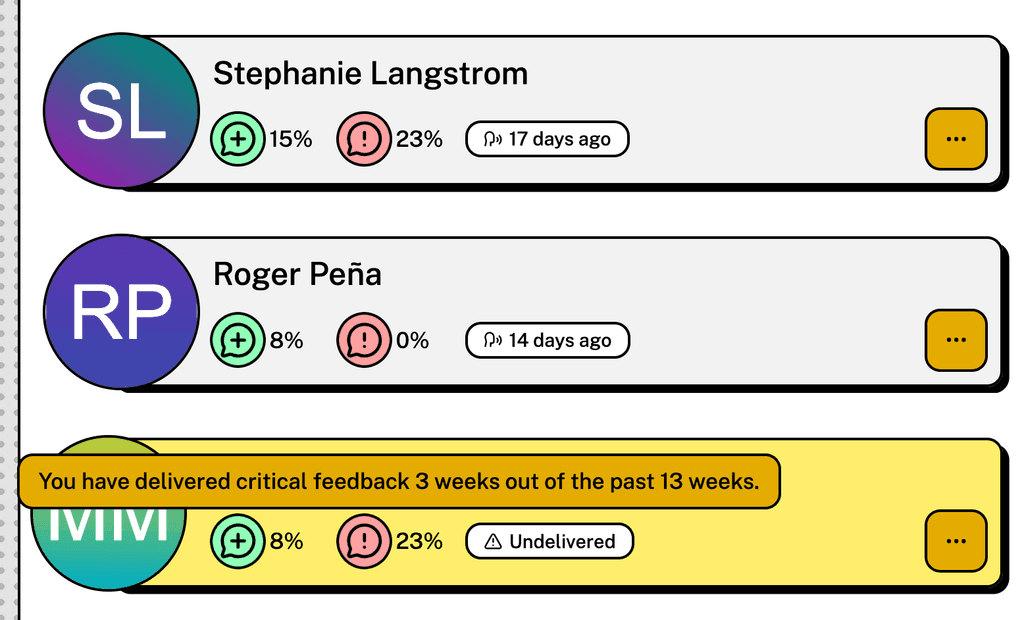
Stay on top of feedback trends with your directs using the feedback trend tool in the ClarityBoss home page.
How Frequent Should I Give Feedback?
It depends! Generally, you’re aiming for between 1-2 weeks, but there are some factors you should consider.
Trust Level
How long have you been managing your direct? If you’re just starting your relationship with your direct, it’s recommended to do consistent weekly positive feedback, for a few months then start to provide more critical feedback.
Tenure
Generally speaking, the more junior a professional is, the more constantly hungry they are for feedback. As a person becomes more senior, they grow in confidence and capability, they will typically seek out more quality over quantity of feedback. Consistency is still important, but don’t be lax on the context and information.
Developmental Goals
Has your direct expressed desires to grow in their role or wish to take on higher responsibilities? If so, that is a sign that they are hungry for feedback as they’re likely moving into uncomfortable territory.
Using ClarityBoss
ClarityBoss includes feedback trend analysis so you can stay on top of the feedback frequency and types. You, the manager, know based on the above factors what cadence and positive/critical mix makes sense
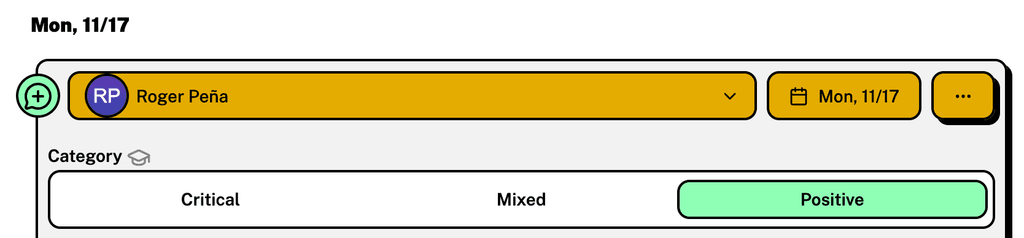
Feedback Categories
Critical
Critical feedback is important to deliver to your directs when you observe behaviors that impact your direct’s performance. As stated above, be careful to roll out critical feedback slowly to directs that you haven’t established strong trust with yet.
Mixed
Sometimes feedback feels right to deliver with what is referred to as a compliment sandwich. A positive, then a critical comment, then another positive. While this option is included in ClarityBoss for this purpose, we’d recommend sticking with the positive / critical as much as possible.
Positive
Who doesn’t love getting some positive feedback about your work? In the first few months of managing someone, you should generally stick with positive feedback. This helps lay a foundation of trust and understanding. However, it’s best to not rely completely on positive feedback. It can give the wrong impression if your direct is not actually performing come review time, when their expectations is that they’ve done no wrong all year. Over-doing positive feedback can backfire.
Tracking Made Simple
With the trend tools and easy ways to categorize your feedback, you’ll easily stay on top of the trends with your directs. Their performance will improve and review time will be a no-surprises breeze!