Recommended Reading For:
- Managers or individual contributors receiving stock options or equity compensation for the first time
- Early stage employees receiving nearly zero strike price ISO options (0.01¢ or similar) that can carry large tax consequences if poorly managed
- You are an American citizen or resident and pay taxes to the IRS
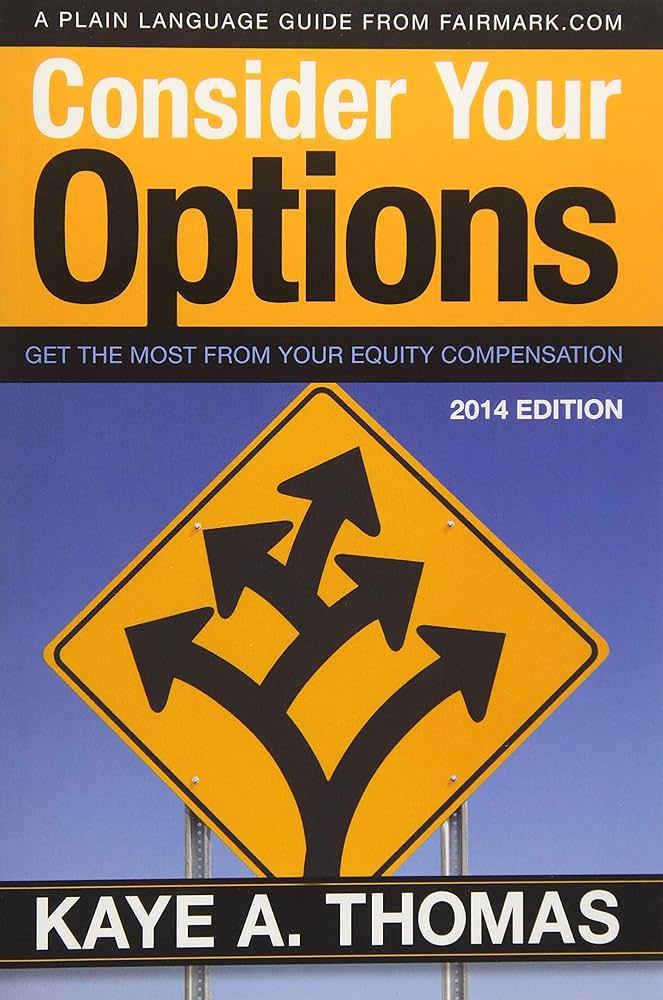
Let’s be honest- I probably should recommend this book to those that have trouble falling asleep, because sitting down to read about the intricacies of the IRS tax code and when you should be considering a section 83(b) recommendation will put anyone to sleep. However, Consider Your Options is a far easier read than the tax code itself, and can potentially save you from making a several thousand dollar mistake when it comes to your taxes.
I have the 2014 version of this book on my bookshelf, and it is well-worn, having been lent out a few times to coworkers. I first read it around that time when I joined the first startup where I was granted options, and it has been updated a few times to keep pace with the changing tax code.
Book Structure
Weighing in at nearly 300 pages, it can be a bit daunting to want to read the book cover to cover. Luckily, you can pick and choose the parts that actually match your situation. The chapters are divided into several parts:
- Laying the Foundation
- Restricted Stock
- Options in General
- Nonqualified Stock Options
- Incentive Stock Options (ISOs) and AMT
- Using Stock to Exercise Options
- Vesting
- Employee Stock Purchase Plans (ESPP)
- Other Topics
Most people won’t be in a position where all of these topics apply to them. I’d personally recommend reading the foundational parts, and then the specific part related to the type of options or equity compensation you were granted. In my case, this meant learning about Incentive Stock Options (ISOs) and the Alternative Minimum Tax (AMT), and the specific strategies to avoid an unexpected tax bill.
Useful, Practical Advice
I’ll lead with the “I am not a lawyer or accountant or investment advisor, this is not investment advice” disclaimer. With that said, here are some helpful things I learned from this book.
For Nonqualified Stock Options, your best strategy is almost always to hold the option as long as you can (either expiry, or in a grace window if you leave the company), exercise, and immediately sell.
The surprising conclusion of all of this analysis is that the best strategy in this situation is the one that ends up making you pay the most tax. The leverage provided by continuing to hold the option is more powerful than the benefit you can achieve by taking advantage of the lower tax rate for long-term capital gains.
Incentive Stock Options are Complex
If you are granted Incentive Stock Options at a low strike price, where your out of pocket expense to exercise is minimal, you should likely early-exercise (if allowed) and file an 83(b) election. This helps you avoid Alternative Minimum Tax surprises down the road if the company is doing well.
There are a lot of terms you will hear when it comes to ISOs, and this book covers them all:
- Section 83(b) election (dedicated chapter to the pros/cons)
- Early exercise (another dedicated chapter)
- Bargain element
- Special holding period
- Disqualifying disposition
Incentive Stock Options are the rare type of company stock you may want to hold onto after exercising, due to the favorable tax treatment. You should generally always exercise them early in the year, so you have the option to “bail out” if the price tanks and you would be underwater while still having to pay AMT.
A final note, while not in the book- tax changes around 2017 have made the Alternative Minimum Tax much less of an issue than it used to be. Before, even a relatively small ISO exercise could trigger AMT (although you would typically receive a credit in following years). These days, it would take a larger exercise to trigger additional meaningful tax consequences, although it is still worth planning out just to be sure.
Summary
Consider Your Options is not an exciting or inspiring read, but is an informative one. If you’re new to options and equity compensation, I highly recommend buying a copy, as it is a good insurance policy against making an expensive mistake you might otherwise make.
You might be tempted to ask ChatGPT or Claude for a summary of what you’d get from this book, but I’d tread with caution. First, the tax laws continue to change, so it might have trained on out of date information. Second, it likely isn’t going to explain as clearly as this book does all the pitfalls you want to avoid.